How CNC Machining Supports the Growth of the Defense Sector
Understanding the Connection Between CNC Machining and Defense Manufacturing
The defense sector depends on components that perform under extreme conditions, often without a second chance to get it right. Vehicles, aircraft, communication systems, and weapons platforms all rely on parts machined to strict tolerances. CNC machining has become the backbone of this production, offering the accuracy, repeatability, and material versatility that defense manufacturing demands.
As defense programs expand across the world, including in Australia, the need for reliable machining partners has grown alongside it. CNC machining Australia providers are increasingly relied upon to deliver parts that meet both performance requirements and strict compliance standards.
What Is CNC Machining?
CNC stands for Computer Numerical Control. In simple terms, it is a manufacturing process where computer programs guide machine tools to cut, shape, and finish a part with a level of precision that manual machining cannot match. A design file is translated into a set of instructions, and the machine follows these instructions exactly, run after run.
This consistency is one of the main reasons CNC machining has become essential to defense manufacturing. Whether producing ten parts or ten thousand, the process delivers the same dimensional accuracy each time.
Types of CNC Machine Used in Defense Manufacturing
Different defense components call for different machining approaches. Understanding the types of CNC machine involved helps explain why this technology supports such a wide range of defense applications.
CNC Milling Machines
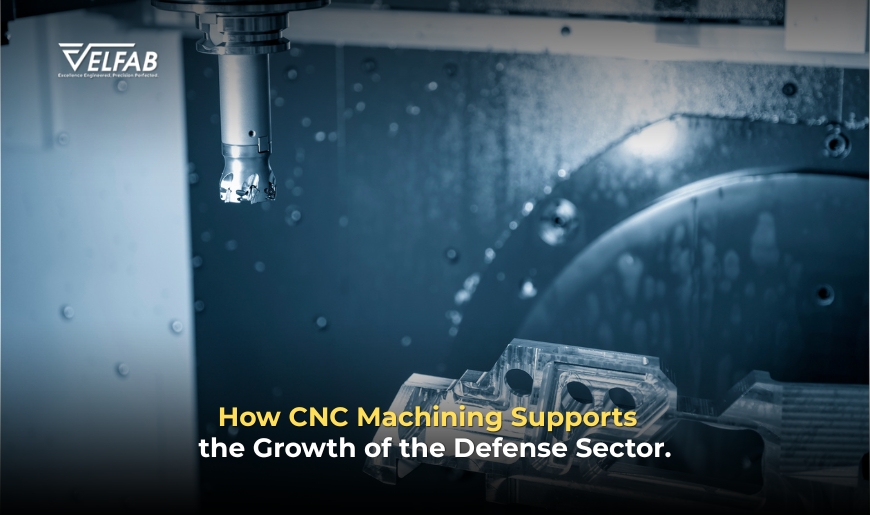
CNC milling machines remove material from a solid block using rotating cutting tools. They are commonly used to produce flat surfaces, slots, pockets, and complex profiles. Many defense housings, brackets, and structural parts start as raw metal blocks shaped through milling.
CNC Turning Machines
CNC turning machines rotate the workpiece against a stationary cutting tool, making them ideal for cylindrical parts such as shafts, pins, and fittings. Defense equipment often includes rotating or cylindrical components that require this method for accurate diameters and smooth finishes.
Five Axis CNC Machines
Five axis CNC machines add rotational movement to the standard three axis process, allowing a tool to reach a part from multiple angles in one setup. This is particularly useful for defense components with angled faces, curved surfaces, or internal features, since it reduces repositioning and keeps tolerances tight across the entire part.
CNC Grinding Machines
Precision grinding is used when a surface needs an extremely fine finish or an exact final dimension. In defense applications, this step often follows milling or turning to achieve the surface quality required for parts that must fit together with minimal clearance.
Why the Defense Sector Relies on CNC Machining
Precision That Cannot Be Compromised
Defense equipment often operates in harsh environments, from extreme temperatures to high vibration and mechanical stress. A part that is slightly out of tolerance can affect the reliability of an entire system. CNC machining Australia manufacturers work to tight dimensional standards, often measured in microns, ensuring every part meets its specification before it reaches assembly.
Working With Demanding Materials
Defense components are frequently made from titanium, stainless steel, and high strength alloys rather than standard metals. These materials resist corrosion, withstand heat, and offer a strong strength to weight ratio, which matters greatly in mobile and airborne defense equipment. CNC machines are capable of cutting these tougher materials while still holding precise tolerances.
Supporting Both Prototypes and Volume Production
Defense programs often begin with prototype parts for testing before moving into larger production runs. CNC machining supports both stages using the same programmed process, which means a prototype and its later production version can be produced with identical accuracy. This reduces delays when a design moves from testing into full deployment.
The Growing Role of Local CNC Machining Australia Capability
As defense investment increases across Australia, there is a growing need for local manufacturing partners who understand both the technical and compliance requirements of the sector. Relying on local CNC machining Australia capability reduces lead times, simplifies communication between engineering teams, and supports supply chain security, which is an increasingly important consideration for defense projects.
Manufacturers who invest in advanced equipment, quality certifications, and skilled operators are well positioned to support this growth. Companies such as Velfab Engineers combine CNC milling, turning, and five axis machining capability with experience across defense, aerospace, and other precision driven industries, allowing them to adapt to varied defense component requirements.
Quality Systems Behind Reliable Defense Parts
Precision alone is not enough. Defense manufacturing also requires documented quality systems, material traceability, and consistent inspection processes. ISO certified facilities that follow strict process controls give defense clients confidence that every batch of components will perform as expected, batch after batch.
Final Thoughts
The defense sector cannot afford inconsistency, and CNC machining provides the accuracy and repeatability needed to meet that standard. From milling and turning to five axis and grinding processes, different types of CNC machine each play a role in producing the wide range of components defense programs require. As demand grows, CNC machining Australia providers with strong quality systems and material expertise will remain central to supporting the sector’s continued expansion.
Looking for reliable CNC machining in Australia for defense-grade components? Get in touch with Velfab to discuss your project requirements.
FAQs
CNC machining provides the precision, repeatability, and reliability needed for critical defense components.
Defense manufacturing uses CNC milling, turning, five-axis CNC, and precision grinding machines for different component requirements.
Common materials include titanium, stainless steel, aluminium, and high-strength alloys for durability and performance.
CNC machining ensures tight tolerances and consistent production through computer-controlled processes and advanced inspection.
Local CNC machining reduces lead times, improves communication, and strengthens supply chain reliability for defense manufacturers.