The Complete CNC Machining Workflow: From Engineering Design to Final Inspection
Modern manufacturing requires more than just cutting metal into shapes. Producing high quality components requires a systematic process that combines engineering expertise, advanced technology, precise machining, and strict quality control.
The CNC machining workflow begins with an engineering concept and continues through design analysis, programming, material selection, machining, inspection, and final delivery.
Understanding this complete process helps manufacturers choose the right machining partner and ensures components are produced with accuracy, consistency, and reliability.
At Velfab, CNC machining solutions are focused on delivering precision manufactured components for industries where performance and quality are critical.
What Is CNC Machining and Why Is the Workflow Important?
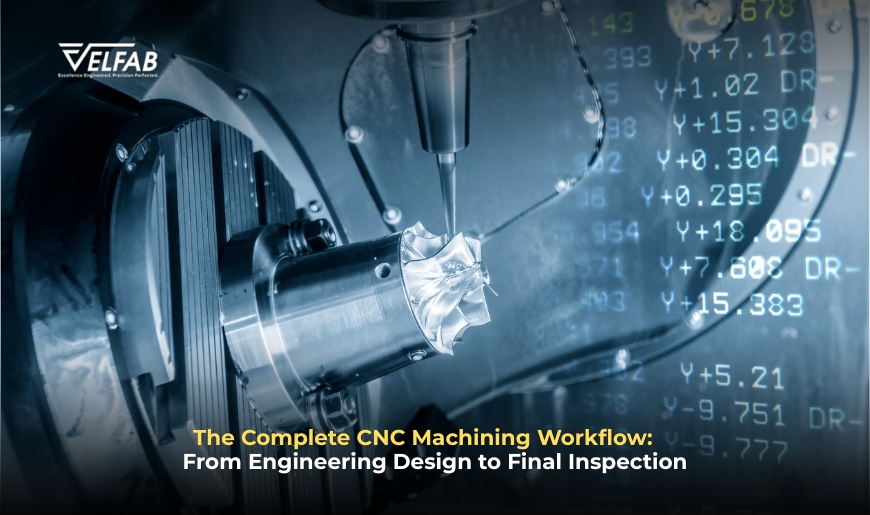
CNC machining is a computer controlled manufacturing process where programmed machine movements remove material from a workpiece to create accurate components.
Unlike conventional machining methods, CNC machines provide:
- High repeatability
- Improved dimensional accuracy
- Complex geometry production
- Consistent quality across production batches
A well planned CNC machining workflow reduces errors, improves efficiency, and ensures the final component matches the original engineering requirements.
Stage 1: Engineering Design and Component Analysis
Every CNC machining project starts with a detailed engineering design.
Manufacturers typically receive 2D drawings, 3D CAD models, specifications, and material requirements from customers.
During this stage, engineers analyse:
- Component geometry
- Required tolerances
- Material selection
- Surface finish requirements
- Manufacturing feasibility
Design for CNC Machining
A component design may need adjustments to make machining more efficient and cost effective.
Engineers evaluate factors such as:
- Tool accessibility
- Feature complexity
- Machining sequence
- Material usage
Design optimisation helps prevent manufacturing challenges before production begins.
Stage 2: Material Selection and Preparation
Choosing the correct material is an important part of the CNC machining process.
Different applications require different material properties, including strength, corrosion resistance, thermal performance, and durability.
Common CNC machining materials include:
- Aluminium alloys
- Stainless steel
- Titanium
- Inconel
- Engineering plastics
Once the material is selected, the raw stock is prepared according to the component requirements.
Proper material preparation helps achieve consistent machining performance and final part quality.
Stage 3: CNC Programming and Process Planning
After design approval, engineers create the machining program that controls the CNC machine.
Using CAD and CAM software, programmers generate tool paths that define:
- Cutting movements
- Tool selection
- Machining speed
- Feed rates
- Operation sequence
Importance of CNC Programming Accuracy
A well developed CNC program ensures efficient material removal while maintaining component accuracy.
Poor programming can result in:
- Increased machining time
- Tool wear
- Surface quality issues
- Dimensional errors
Experienced programmers optimise machining strategies to achieve the required results.
Stage 4: CNC Machining Operations
Once programming is complete, the component moves into production.
Depending on the design requirements, manufacturers may use different CNC machining processes.
CNC Milling
CNC milling uses rotating cutting tools to remove material and create complex features.
It is commonly used for:
- Slots
- Pockets
- Contoured surfaces
- Precision holes
CNC Turning
CNC turning rotates the workpiece while cutting tools remove material.
It is ideal for producing cylindrical components such as:
- Shafts
- Bushes
- Precision fittings
Multi Axis CNC Machining
Advanced multi axis machining allows manufacturers to produce complex components with fewer setups.
This improves:
- Accuracy
- Production efficiency
- Surface quality
- Repeatability
Stage 5: In Process Quality Monitoring
Quality control does not begin after machining is completed. It is integrated throughout the manufacturing process.
During production, manufacturers monitor:
- Machine performance
- Tool condition
- Component dimensions
- Surface quality
Regular checks help identify potential issues early and maintain consistent production standards.
Stage 6: Final Inspection and Quality Verification
The final inspection stage confirms that the finished component meets all customer specifications.
Advanced inspection equipment is used to verify:
- Dimensional accuracy
- Geometric tolerances
- Surface finish
- Critical features
CMM Inspection in CNC Machining
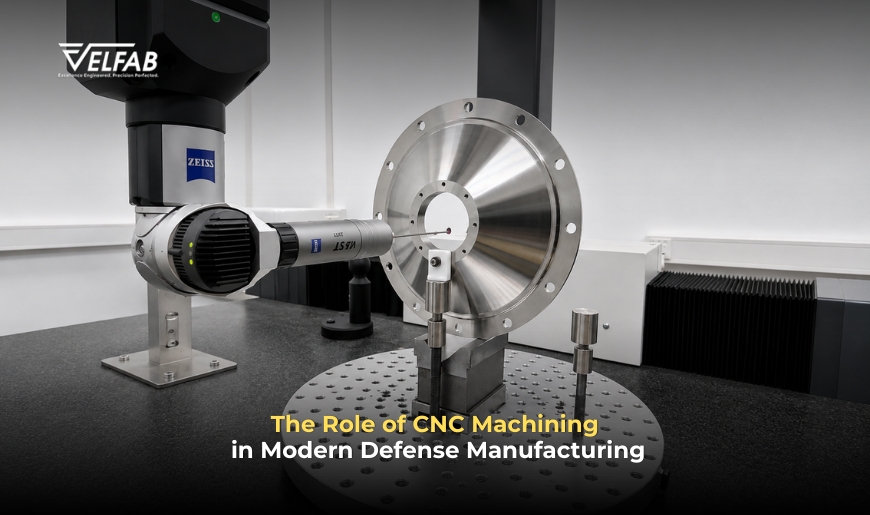
Coordinate Measuring Machines (CMM) are commonly used for high precision inspection.
A CMM measures component geometry and compares the actual part against the original CAD model or engineering drawing.
This ensures that every critical measurement meets the required specification.
Stage 7: Finishing, Documentation and Delivery
After inspection approval, additional finishing processes may be completed depending on application requirements.
These may include:
- Surface treatments
- Deburring
- Cleaning
- Assembly preparation
Quality documentation is also prepared to provide manufacturing traceability and confirm compliance with customer requirements.
The finished components are then packaged and delivered according to project specifications.
How Choosing the Right CNC Machining Partner Improves Results
A successful CNC machining project depends on more than machine capability.
The right manufacturing partner provides:
- Engineering support
- Advanced machining technology
- Experienced operators
- Quality inspection systems
- Reliable production management
Working with an experienced CNC machining company helps reduce production risks and ensures consistent component quality.
The Future of CNC Machining Workflows
CNC machining continues to evolve with advancements in automation, digital manufacturing, and smart production technologies.
Modern machining workflows combine engineering software, advanced machines, and inspection systems to improve efficiency and accuracy.
As industries demand more complex and precise components, a structured CNC machining workflow will remain essential for delivering reliable manufacturing solutions.
Partner With Velfab for Precision CNC Machining Solutions
From engineering design support to final inspection, Velfab provides complete CNC machining solutions focused on accuracy, quality, and reliable production.
Whether you need prototypes, custom components, or production machining support, our team helps transform engineering designs into precision manufactured parts.
Contact Velfab today to discuss your CNC machining requirements.
FAQs
The CNC machining process includes engineering design, material selection, CNC programming, machining operations, quality inspection, finishing, and final delivery. Each stage ensures the finished component meets required specifications and performance expectations.
CNC machining uses computer controlled movements to produce components with high repeatability and precision. Advanced programming, machine control, and inspection methods help maintain consistent dimensions across individual parts and production batches.
Manufacturers typically require engineering drawings, CAD files, material specifications, tolerances, surface finish requirements, and production quantities. These details help engineers plan the most suitable machining approach.
Inspection verifies that machined components meet design requirements. Processes such as CMM inspection and dimensional measurement help identify deviations and ensure every finished part meets quality standards before delivery.
Yes, CNC machining is suitable for prototype development as well as low volume and high volume production. It allows manufacturers to create accurate parts quickly while maintaining consistent quality for larger production requirements.