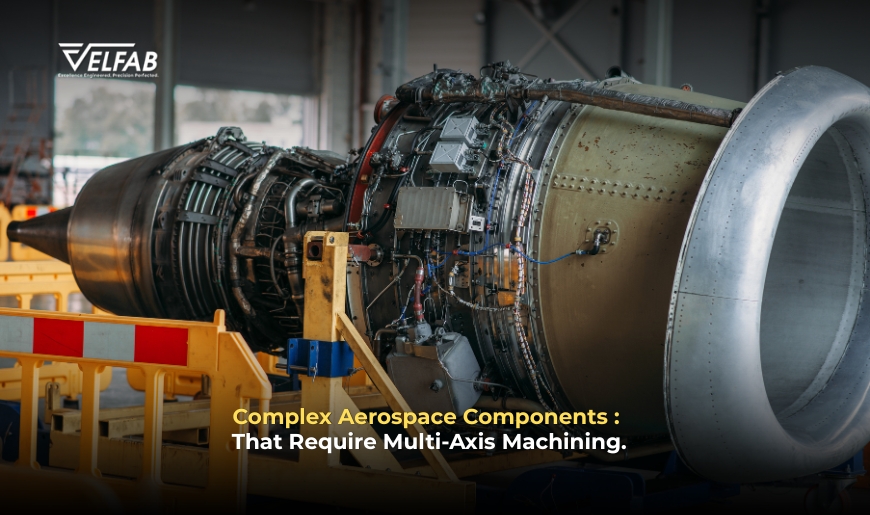
Complex Aerospace Components That Require Multi-Axis Machining
Aerospace components are among the most demanding parts in precision manufacturing. They often include curved surfaces, deep pockets, angled holes, thin walls, and strict tolerance requirements. A simple machining approach may not be enough for such parts. This is where multi axis machining becomes important.
In aerospace manufacturing, every part must support safety, weight control, strength, and performance. Even a small error can affect fit, function, or assembly. Multi axis machining helps manufacturers create complex parts with fewer setups and better control over accuracy.
Why Aerospace Components Need Multi Axis Machining
Aerospace components are rarely simple blocks or plates. Many parts are designed to reduce weight while maintaining strength. This often leads to complex shapes that are hard to machine with basic equipment.
Traditional machining may require the part to be moved and fixed again many times. Each movement creates a chance for alignment error. Multi axis machining allows the cutting tool to approach the part from different angles in one setup. This improves consistency and reduces handling risk.
It also helps when machining materials such as aluminium, titanium, stainless steel, Inconel, and other advanced alloys. These materials are commonly used in aerospace because they offer strength, heat resistance, or weight benefits. However, they need careful machining to avoid distortion, tool wear, or surface damage.
Common Aerospace Components Made With Multi Axis Machining
One common example is structural aircraft brackets. These parts may look small, but they carry load between major assemblies. They often include pockets, ribs, curves, and holes at different angles. Multi axis machining helps produce these features accurately while removing extra weight.
Engine components also need advanced machining. Parts used near propulsion systems may face heat, vibration, and pressure. They can include complex internal and external shapes. Multi axis machining allows smooth tool movement around curved surfaces and hard to reach areas.
Landing gear parts are another example. These components must handle repeated force during takeoff, landing, and ground movement. Machining accuracy is important because the parts must fit correctly with bearings, pins, and support structures.
Aerospace housings are also suited for multi axis machining. These may be used for sensors, controls, electronics, or fluid systems. They often need accurate sealing faces, threaded holes, deep cavities, and precise mounting points.
Satellite and space related components can also require this process. Weight saving is critical in space applications. Components may have thin wall sections, lightweight pockets, and complex forms. Multi axis machining helps achieve these features without frequent repositioning.
Quality Checks for Aerospace Components in Multi Axis Machining
Machining is only one part of aerospace component production. Inspection is equally important. Each dimension must be checked against design requirements. This may include tolerance verification, surface finish checks, thread inspection, and material traceability.
Quality control helps confirm that the finished part matches the drawing. It also helps identify errors before the component reaches assembly. In aerospace work, this step reduces risk and supports consistent production.
Good process control starts before cutting begins. Tool paths, fixture planning, material selection, and tolerance review must be checked carefully. This helps avoid rework and delays.
Benefits of Multi Axis Machining for Aerospace Parts
- Accuracy
Since the part can be machined from many angles in one setup, the chance of alignment error is reduced. This is useful for parts with holes and features that must relate precisely to each other.
- Improved surface finish
Smooth tool movement can reduce marks on curved surfaces. This is helpful for parts where friction, sealing, or airflow matters.
- Better production efficiency
Fewer setups can reduce machining time and inspection delays. It can also help when producing prototypes, small batches, or repeat production parts.
4. Design flexibility
Engineers can create lighter and more efficient aerospace components because the machining process can handle complex shapes. This supports modern aircraft and space system design.
Practical Example of Multi Axis Machining in Aerospace
Consider an aircraft support bracket. The design may include a curved outer profile, pockets for weight reduction, angled mounting holes, and tight tolerance faces. A basic machine may require several separate setups to complete these features.
With multi axis machining, most features can be produced in one controlled setup. The cutting tool can reach different sides of the part without repeated manual repositioning. The result is better repeatability and a lower chance of mismatch between features.
This is especially useful when the same component must be produced many times with consistent results.
Final Thoughts
Aerospace components require more than basic machining. They need accuracy, repeatability, careful material handling, and strong inspection practices. Multi axis machining supports these needs by allowing complex shapes to be produced with better control.
As aerospace designs become lighter and more advanced, the demand for multi axis machining will continue to grow. It gives manufacturers the ability to machine complex parts while maintaining the quality expected in aerospace applications.
Need complex aerospace components machined with accuracy and reliability? Talk to Velfab for precision multi axis machining support.
FAQs
Multi axis machining is used because aerospace components often have complex shapes, angled holes, and tight tolerances. It helps machine several sides of a part in fewer setups.
Aircraft brackets, housings, engine parts, landing gear parts, sensor mounts, satellite parts, and lightweight structural parts often need multi axis machining.
Common materials include aluminium, titanium, stainless steel, Inconel, and other advanced alloys. The material depends on strength, weight, heat, and corrosion needs.
It reduces the need to reposition the part many times. This helps maintain alignment between features and supports better repeatability.
Yes. It is useful for prototypes because complex designs can be tested with accurate machining before full production begins.